
What Can You Even Eat?
NUTRITION AND ANTI-INFLAMMATORY LIVING · 13 MIN READ
Seven(ish) overhauls, one very bad diet,
and what I finally learned about
listening to my own body.
The waiter comes to the table and I am still reading the menu, because I am always still reading the menu.
And somebody says it. Loudly enough for the table to hear, in the voice people use when they want you to know it is a joke.
"Just bring her lettuce."
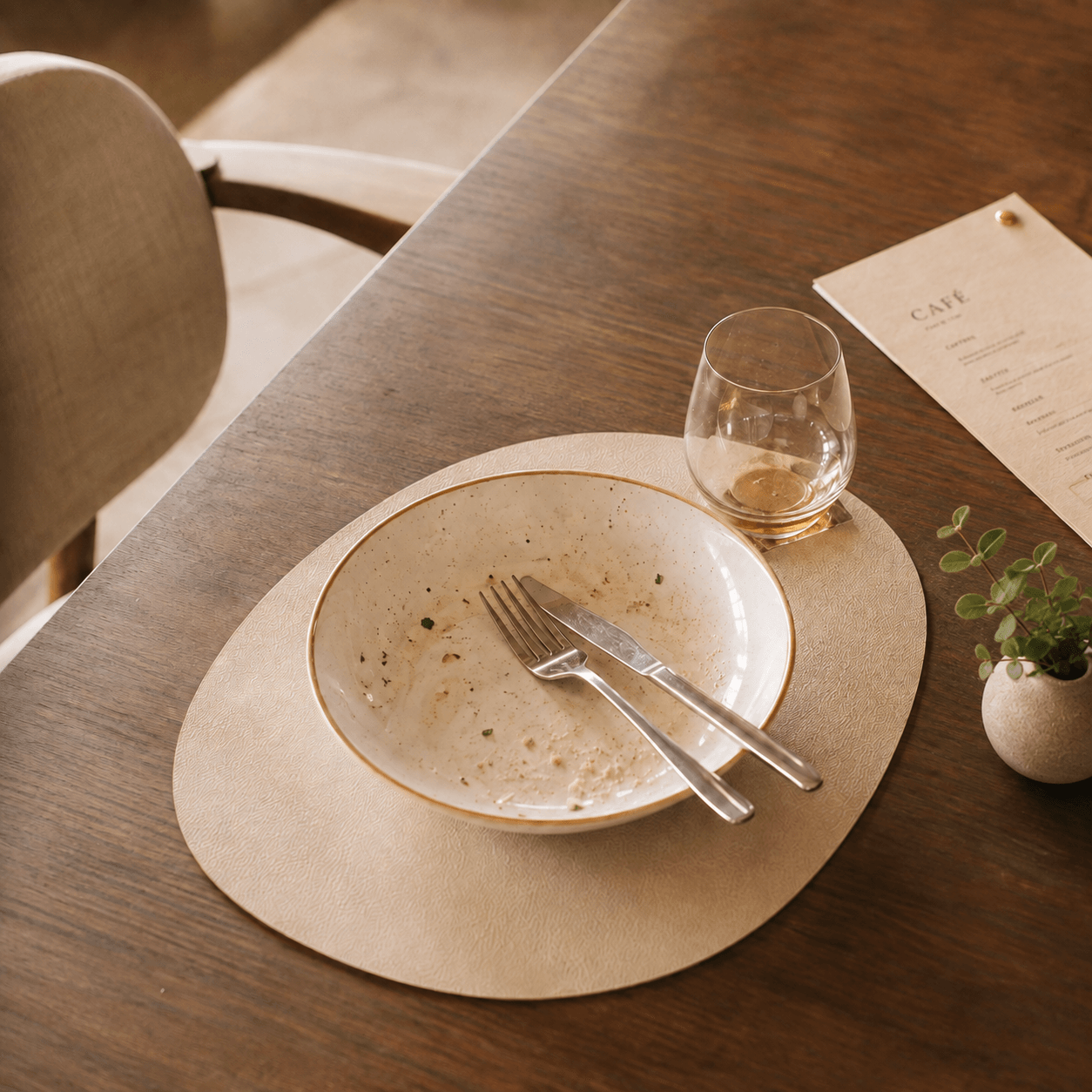
Everyone laughs. I laugh too, because that is what you do, and I go back to the menu to see whether there is anything on it at all that I can actually eat, and there usually is not... except lettuce.
That happened more times than I can count. Restaurants, family dinners, the group planning a get together and someone asking, in front of everyone, "well, what can you even eat?" People inviting us over and then there being genuinely nothing on the table for me. Not once, countless times.
That last one hurt the most, and it took me years to admit it. Not the jokes. The showing up somewhere you were invited, hungry, and quietly realising you will be going home to eat.
For a long stretch, I was the joke. I was the vegan. I was the one being asked what she could possibly eat, and I laughed along every single time.
What I used to believe
I want to be clear that I am not writing this from some position of always having known better. I ate meat three times a day.
Breakfast, lunch and dinner, and if a meal did not have meat, carbs and vegetables on the plate, it was not a real meal. That is what I was taught and I believed it completely. Yogurt. Cheese. Charcuterie boards. Processed meats. If you grew up in the nineties you will remember the food guide, the wheel or the pyramid depending where you were, and I followed it the way you follow something nobody around you has ever questioned.
I thought I was eating healthy. For years and years, I genuinely thought I was eating healthy.
And I did not know a single vegetarian. Not one. It was not something I was exposed to, not something anyone in my life was doing, and so the idea that a person could be well without meat at every meal simply was not available to me.
The overhaul I would not recommend to anyone
So here is the part where I tell on myself.
When I finally changed, I went plant based overnight. Not gradually. Overnight.
I would not recommend that to a single person reading this.
I had no idea what I was doing. I had never learned to cook that way. So I did what everybody does in that situation, which is replace what I had removed with whatever was easy, and easy meant processed. Fake meat products. Packaged everything. Sugar. Long ingredient lists full of things I could not pronounce and fillers doing the work that actual food should have been doing.
I had removed the thing I thought was the problem and replaced it with a different problem, and for a while I did not feel much better, and I could not understand why.
If you take one thing from this post, let it be that. Removing something is only half of it. What you put in its place is the other half, and nobody talks about the second half.
The first thing that actually worked
Dairy.
That was the first thing I cut properly and it is the one where I noticed a difference almost immediately.
Less puffy. That is the word I keep coming back to. Less swollen. Less inflamed. My digestion settled. Food seemed to move through me rather than sitting somewhere feeling heavy.
It was not dramatic and there was no morning where I woke up transformed. It was more like turning down a noise I had stopped noticing because it had been on my whole life.
After that, as I actually learned to cook plant based meals, other things followed. Processed food. Sugar. Alcohol. And every time I took something out and paid attention, I felt a bit better and I understood myself a bit more.
The order matters less than the paying attention. That is the whole method, and I will keep saying it.
7ish overhauls and counting
I am somewhere around food revision number seven. Big ones, not small tweaks.
This diet. That diet. No carbs. No sugar. No processed food. Fasting. Water fasting. Plant-based. Gluten free. No saturated fats, which also meant losing coconut oil and coconut milk, and I had not expected that one. Alcohol, which I will have been free of for two years this October. Processed food & Sugar, over and over, because it creeps back in.
I am not finished. I will change again, because my body will tell me something new and I will listen.
I am telling you the number, the 7ish, because I want to break something. Somewhere along the line we picked up the idea that changing your mind about food is failure. That if you tried something and it did not work, you were not disciplined enough, and if you change again you are being flaky.
Seven(ish) overhauls is not seven failures.
It is seven times I listened.

The three weeks I got it badly wrong
Now the one that went properly wrong, because I am not interested in telling you a story where every choice worked.
I did a no carb diet. Three weeks.
It was the worst brain fog I have ever had that was not caused by an actual disease. Exhausted. Shaky. Weak enough that I could not work out. I could not think straight, could not hold a thought, and I felt like my body was turning into nothing.
And here is the part I want you to hear, because it is the part I got wrong. I did not stop. I told myself, it is a diet, you are not supposed to feel great.
It is a diet, you are not supposed to feel great.
Read that back. That sentence is doing so much damage out there. Somewhere we all agreed that suffering is evidence something is working, when in my experience it is usually evidence of the exact opposite.
Then I started adding carbohydrates back in and I got genuinely sick. Stomach cramps. Even more lethargic. My body could not process them at all anymore.
I know what withdrawal feels like and this was not that. This was three weeks of my body telling me clearly, and me deciding a diet knew better.
That is the mistake. Not the carbs. Overriding the signal my body is designed to give me, because a protocol told me to.
The wine, and why I do not care what the studies say
I loved red wine. I want to say that plainly, because I think people assume women like me were never any fun. Plant based, flower child, would rather stay in with a book and a cup of tea on a Friday night. But I promise you, I used to be a lot of fun.
I liked drinking. I liked unwinding after work. Going out dancing. Parties and get-togethers where everybody had a drink in their hand, because that was the norm in my life and in my circle. I had a high tolerance, I enjoyed it, and it was part of my life for a long time.
Then it changed. One drink and I was loopy in a way that did not match the amount. Slurring slightly. Foggy. Not making sense.
Later, once I thought my body might handle it again, I tested it. One glass of wine. Here is exactly what happened, and I am being this specific because most women feel these things without ever having words for them.
Severe brain fog, the kind where words go missing mid sentence. Loopiness out of all proportion to one glass. Heaviness through my whole body. My joints went sore and stiff. My ankles puffed up. My hands felt tight, like the skin did not quite fit. My wrists and knees felt swollen. And flushing, my cheeks and my chest going bright red, or a little too pink...
One glass.
Now, there is a well-known doctor in this space, Dr Gundry, who I follow a lot of this protocol and admire some of his work, who says a daily glass of red wine is perfectly fine. He is not alone in that. And when I looked at the actual research on alcohol and autoimmune disease, I found something more complicated than either side usually admits.
A large genetic analysis pooling data from around a million people looked for a causal link between alcohol intake and four autoimmune conditions, including MS, and did not find a significant one. Meanwhile, other work associates heavy or chronic drinking with raised inflammatory markers and a more permeable gut barrier.
So the population evidence is genuinely mixed. I am not going to pretend otherwise to win an argument.
But here is what a study like that is actually measuring. It takes a million people, pools them, and asks whether drinking makes the average person in that pile more likely to end up with one of these diseases. That is a useful question. It is not my question.
My question is what happens in this body, on a Tuesday, after one glass. And the answer to that is not in any paper, because I was never in the study.
I am not a population. I am
one woman with a specific body, and my
body flushes, swells, and fogs on a single glass
of wine. No amount of pooled data is going
to talk my ankles or brain fog out of it.
Both things can be true at once. The average can be fine, and you can still not be fine, and you are not required to argue with a spreadsheet about what you can feel happening in your own hands.
That is the whole permission I am trying to hand you here. You do not need the research to agree with you before you are allowed to believe your own body, and you do not have to explain or defend yourself to anyone.

Why our bodies respond differently, and why that’s normal
This is the part that actually changed how I think, and I wish somebody had explained it to me fifteen years ago.
There is a study called PREDICT that fed identical, carefully measured meals to over a thousand people and then measured what happened in their blood afterwards. Not what they reported. What actually happened.
The variation between people was enormous. Blood fat responses to the very same meal varied by around a hundred percent across the group. Blood sugar responses varied by roughly sixty eight percent.
And the detail that stopped me: even identical twins, sharing the same DNA, often responded very differently to exactly the same food. Genetics explained only about a third of the variation in blood sugar response and almost none of the variation in blood fat.
Same meal. Same genes. Different bodies.
So when someone tells you confidently that a food is fine, or that a food is poison, what they usually mean is that it was fine, or poison, for the bodies in whatever study they read. Not necessarily yours.
Which is why the most reliable expert on
your body is you, provided you are
actually paying attention.
And some things really are just not good for us
I want to be careful here, because I have spent this whole post telling you that everybody is different, and I do not want that to collapse into nothing matters, eat whatever you like.
Some of it is not a matter of opinion.
There is a large and fairly consistent body of research on ultra-processed food and inflammation, looking at actual markers in the blood like CRP and IL-6. And what the research keeps pointing at is not only the sugar and the fat. It is the additives. The emulsifiers, preservatives, colourings and stabilisers that essentially never appear in a home kitchen, and what they appear to do to the gut lining and the bacteria living in it.
The theory, roughly, is that these things can make the gut wall more permeable and shift the balance of the microbiome, and the immune system responds to that the way an immune system responds to anything it does not like.
And there is a piece of this that almost nobody thinks about, which is the arithmetic.
An additive gets approved because the amount in one serving falls under a threshold. Fine. But you are not eating one serving once. You are eating your favourite thing with that dye in it a couple of times a month for twenty years, alongside a dozen other approved-under-the-threshold ingredients in everything else you eat that day. Nobody is measuring the total.
The label is telling you about one packet. Your body is keeping a running total across decades.
And on top of that, sensitivity is not evenly distributed. I can be near certain chemicals, not even eat them, and feel my body starting to flare. Somebody else walks through the same room and feels nothing at all. Neither of us is imagining our own experience.
So I am not going to hand you a list of forbidden foods, because that is not what this is. But I am also not going to pretend the evidence is neutral about ultra-processed food and sugar, because it is not.
There is a lot more to say here, about additives, natural flavours, what is sprayed on our produce, and what those words on a label actually mean. I am writing about it properly in its own post.
LINK → What is actually in it: additives, natural flavours, and reading a label.

What paying attention actually looks like
This is not complicated and it does not require you to buy anything.
Eat, and then notice. Did your stomach hurt. Did you bloat. Are you gassy. Did you get a rash, or flush, or feel heavy, or foggy, or suddenly exhausted an hour later.
We are so quick to explain those away. It is indigestion. It is nothing. It is a bad sleep. And we reach for the antacid and carry on.
But that is a message. Every one of those is your body reporting on something it just processed, and if you tune the reports out for long enough you eventually cannot hear them at all.
Write it down. That is the only real technique here. Date, what you ate, how you felt, how you slept, what your body did. Not to be obsessive about it and not forever, but for long enough that patterns start showing up that you could never have held in your head.
I still do this after five years, because I am still learning things about my own body.
That is not a failure of the method.
That is the method.
And consumption is not only food
One more thing, because it belongs here even though it does not belong in most nutrition posts.
What we consume is not only what we eat.
What am I taking in on social media all day. What am I taking in at work. From the people around me. What is my environment telling me, is my house cluttered, is it calm. What am I consuming visually, and through my ears, and through my nervous system, hour after hour.
All of it lands in the same body. You can eat perfectly and still be inflamed by your life, and I have been there too.
I have a full post on this one, on what stress and everything else we absorb actually does to the body, and how to start turning the volume down.
LINK → What your body has been carrying: stress, the nervous system, and everything else we consume.

If you eat meat and dairy and have no plans to stop
I want to speak to you directly, because you have probably been waiting for the part where I tell you what you are doing wrong.
That part is not coming.
If your body feels good, if your digestion is fine, if you are not foggy or heavy or exhausted, if nothing is wrong, then nothing here is aimed at you. You do not owe anybody a change. Truly.
I have been the person saying have you tried this, have you tried that. I probably still am sometimes. But the difference now is that I will never tell you what to do, and I mean that as more than politeness.
It is because it does not work.
Nobody has ever changed anything real because they were told to.
We change when we find it ourselves, when we feel it in our own body, when we go looking and land on something that finally makes sense of what we have been experiencing. That is the version that sticks.
So the only thing I will say is this. It costs you nothing to be curious. To read something. To notice how you feel after a meal. To ask a question you have not asked before.
And if a day comes when something does start to feel wrong in your body, you will already have some idea where to look, instead of starting from zero the way I did, fifteen years in and frightened.
What I say now when someone jokes at the table
I do not laugh along anymore.
Now I say something like, my body responds well to not eating that. Or, lightly, honestly curious: how does your stomach feel after you eat that?
It lands differently than you would expect. Not as a comeback. As a genuine question, because most people have genuinely never been asked it and you can watch them stop and actually check.
I want to say one more thing about all those years, because there is something underneath it that took me a long time to see.
When people asked why I went vegan, and I said it was for my health, it landed softly. People nodded. It was acceptable.
When I said it was because I love animals and I did not want to eat them, it did not land the same way at all. People would ask, before I had said anything, whether I was going to be one of "those vegans" who talks about the animals.
So I learned to read the room and lead with my health. And I hate that I learned that.
The truth is that both were always true. I slowly stopped eating meat around seven years ago, before any diagnosis, because it had started to feel wrong to me and because I have always loved animals and could not square it any longer. The Graves diagnosis is what pushed me the rest of the way. But the first reason was the animals, and I stopped saying so because it made people uncomfortable.
I am saying it now. Both reasons are real,
and neither one needs anyone’s permission.
What I actually want you to take from this
Not a food list. Not a protocol. Not my diet, which is mine, and which will probably change again.
Just this.
Your body is reporting to you constantly. It has been the whole time. Bloating, heaviness, fog, flushing, pain, the crash an hour after a meal. Those are not nothing. They are information, and you are the only person on earth who receives them.
You are allowed to try something and change your mind. You are allowed to be on overhaul number seven(ish). You are allowed to decide a diet is not working for you three days in, instead of white knuckling through three weeks because suffering felt like proof.
And you are allowed to take what fits from one place and something else from another and leave the rest, no matter how certain anyone sounds.
The only person who can hear your body is you.
So listen to it. It will always tell you the truth.
Where to go from here
If any of this landed, if you have been quietly wondering whether the way you feel after eating is actually normal, that wondering is worth following.
You do not have to overhaul anything. You do not have to give up a single thing this week. Start by noticing, and let noticing be enough for a while.
Come sit with us. The TRAC community is full of women figuring this out in real time, sharing what worked and what did not. → Join us
Or work with me one-on-one. If you want help making sense of what your body has been telling you, we can work through it together. → Book a call
Wherever you are with all of this, you are not behind, and you are not doing it wrong.
I am still figuring mine out too.
With you,
Jennifer
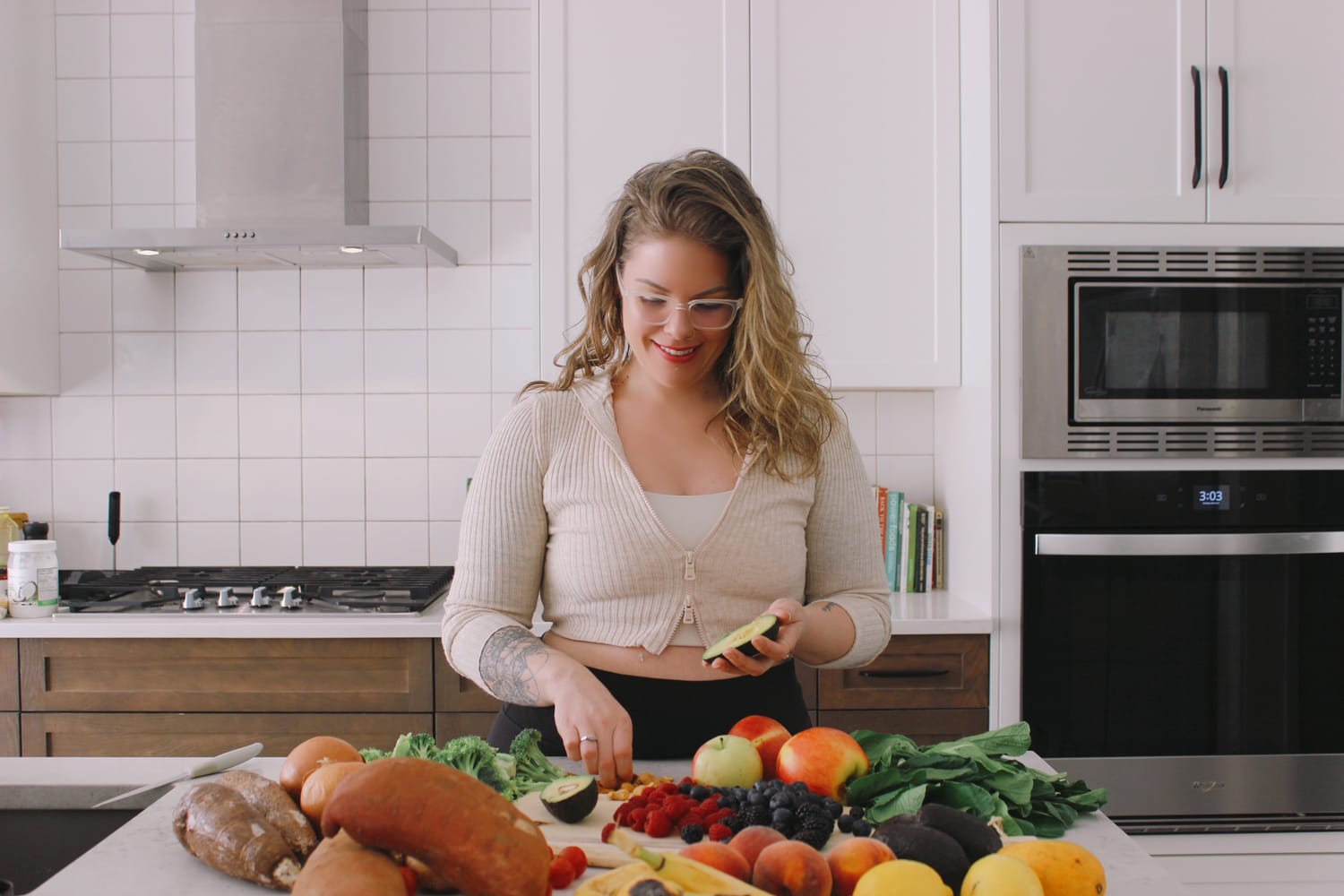
I’m a Certified Sexual Health Educator and Whole Health Consultant, not a physician. Everything here is my own experience and general education, and none of it is medical advice or a substitute for care from your own medical team. Please don’t start, stop, or change any treatment based on something you read on the internet, including mine.
SOURCES
Berry SE, et al., "Human postprandial responses to food and potential for precision nutrition," Nature Medicine (2020) — the PREDICT 1 study
https://www.nature.com/articles/s41591-020-0934-0
Jiang X, et al., "Alcohol Consumption and Risk of Common Autoimmune Inflammatory Diseases: Evidence From a Large-Scale Genetic Analysis Totaling 1 Million Individuals," Frontiers in Genetics (2021)
https://www.frontiersin.org/journals/genetics/articles/10.3389/fgene.2021.687745/full
ZOE, summary of the PREDICT programme findings on individual variation
https://zoe.com/learn/zoe-predict-studies-what-we-ve-learned
"Ultra-Processed Food Consumption and Systemic Inflammatory Biomarkers: A Scoping Review" (2025)
https://www.ncbi.nlm.nih.gov/pmc/articles/PMC12472508/
"Low-Grade Inflammation and Ultra-Processed Foods Consumption: A Review," Nutrients (2023)
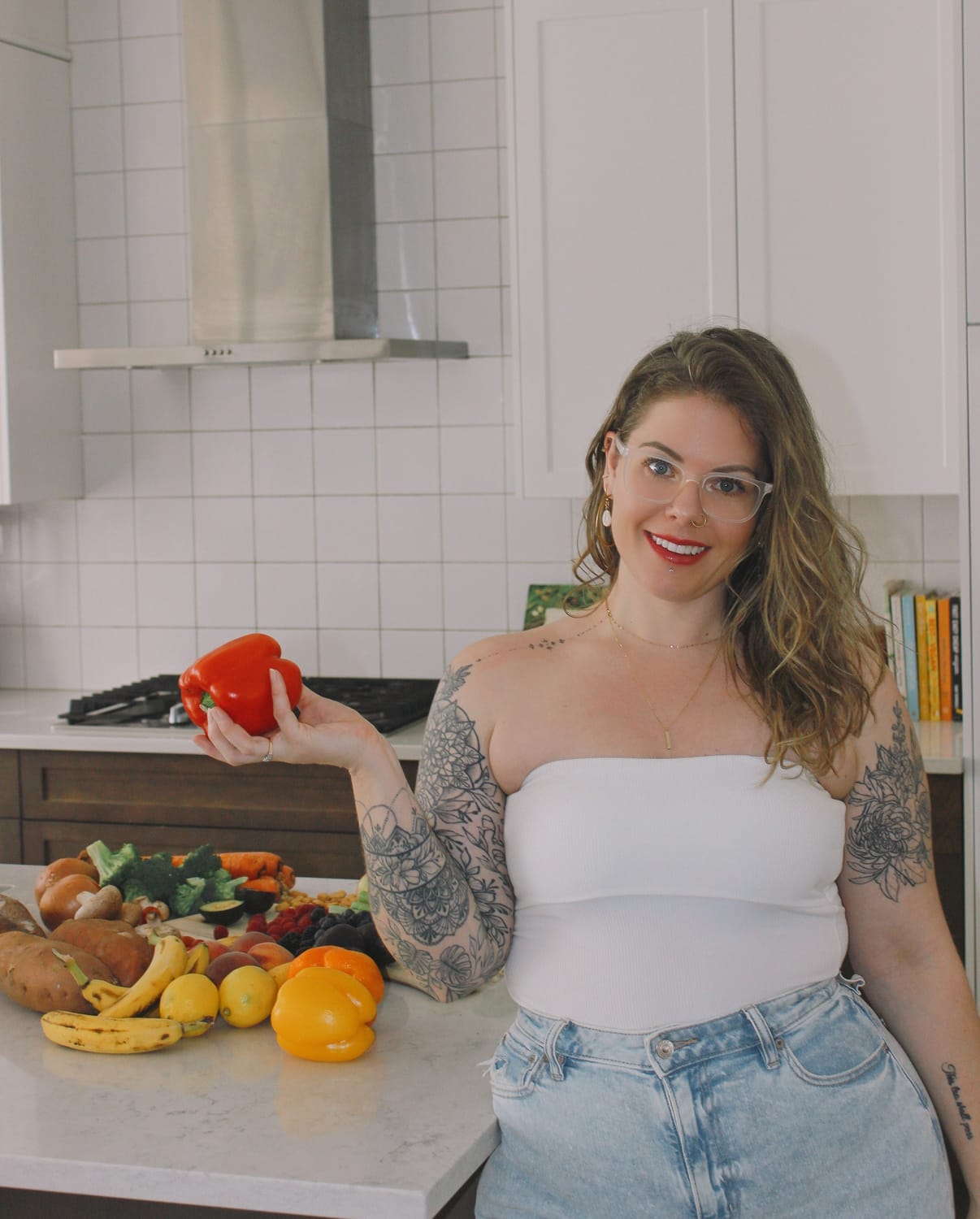
HEY, I’M JENNIFER...
I'm a certified sexual health educator and whole health consultant, and I've spent fifteen years living what I now help other women navigate. I put Graves' disease into remission, recovered from Chronic Inflammatory Response Syndrome, and I manage MS and fibromyalgia through nutrition, nervous system regulation, and a deep commitment to understanding my own body.
I'm not on the other side of this. I'm still walking it.
I built TRAC Wellbeing to be the space I wish I'd had back then: warm, honest, informative, and genuinely understanding. If you're navigating chronic illness, hormonal health, or your intimate well-being, you're in the right place.
Let's Take Responsibility And Control of our health, together.


JOIN MY MAILING LIST

Taking responsibility and control of our health and well-being. Education is power. Prevention is protection.
NEWSLETTER
Notes from me on chronic illness, nutrition, nervous system support, and living well in a complicated body.
No spam, ever.
© 2025 TRAC Wellbeing — tracwellbeing.com — hello@tracwellbeing.com