
When Your Body Changes and Nobody Asks About That Part
SEXUAL WELLNESS AND INTIMACY · 11 MIN READ
{{ A note before we start. This post is about intimacy, touch, and sexual health as part of physical health. It is educational, not graphic. If this is not what you came for today, one of my other posts
might serve you better; start where you're at and with what feels comfortable. }}
Touch that hurt, desire that went quiet, and the question not one doctor has ever asked me.
We were on the couch. My legs were across his lap, and he was rubbing my leg, the way he had a hundred times before.
And it hurt.
Not a sore muscle. My skin. It felt raw, like the top layer had been taken off, and his hand moving over it was almost unbearable.
I put my hand on his and said, can you stop rubbing my leg? It's hurting.
He said, what? Did you hurt yourself?
And I said no. It is my skin. You rubbing my leg hurts.
He stopped straight away. He had done nothing wrong. There was nothing to see and nothing to point at, and I had no explanation to give him.
What happened after that is the part I want to talk about. Because he would forget, the way anybody would, and reach over and rub my shoulder or my arm while we were sitting together, and I would have to say it again. And again.
And somewhere in all of that repeating, I started pulling away first.
It was easier to not be touched than to
keep explaining why touch hurt.
If you have moved your arm out of reach of somebody who loves you and then felt terrible about it, you are in the right place.

What I decided it meant about me
That I wouldn't be able to be in an intimate relationship. Not this one, not any.
Because my body was unpredictable, and I could not tell anybody what it was going to do. Some weeks touch hurt. Some weeks there was less feeling than there should have been. A massage would either hurt or land on skin that could not fully register it.
I could not promise anybody anything, including myself.
So the conclusion I came to, sitting with that, was the same one I had come to about everything else in those years.
I was not lovable in a body that did this.
When light touch hurts: what allodynia is
What was happening to me is called allodynia.
The formal definition is pain caused by a stimulus that does not normally cause pain. A light touch. A feather. A cotton swab drawn across the skin. Things that should register as sensation and instead register as pain.
It is a form of neuropathic pain, and it shows up in multiple sclerosis and in fibromyalgia, both of which I have. It comes from nerve damage and a nervous system that has become hypersensitive and reads harmless input as a threat.
People describe it as skin that feels sunburnt. As clothing that feels like sandpaper. As a hairbrush that feels like needles.
I lived that for years without ever hearing the word once.
And I want you to notice what not having the word did. Without it, there was nothing to point at. No name, no diagnosis, nothing to hand anybody. Only me asking him to stop, over and over, with nothing behind the request except that it hurt.
I did not know any of that at the time.
All I knew was that being touched hurt,
and I had no way to explain it.
The doctor who could not get past the word
I was in an emergency room, telling a doctor that half my body had gone numb. He asked me to describe it, which was the right thing to do.
So I described it. I told him where the numbness was, and that included my vulva and my anus. Those are the words I used, because those are the words for those parts of the body, and I was answering his question accurately.
I will never forget his face.
He was uncomfortable. He said, " Your vulva. Why are you telling me about that?"
And then he moved past it as fast as he could.
I want to be clear about what happened there, because at the time he made it seem as though I had done something wrong. Loss of sensation in the genital and perineal area is a recognized neurological symptom. It is relevant. It tells you where in the nervous system something is happening. He asked me to describe my numbness, and I did, and he treated my accurate answer as an embarrassment.
I did not raise it again. Not with him, and not with anybody, for a very long time.
I stopped raising it because I already knew how it would go. I knew I would get the same face, the same rush past it, the same silence where the acknowledgment should have been.
Two numbers I would like you to sit with
When I went looking at the research on this, I found a study of women with MS that measured sexual function properly, using validated clinical scales rather than asking people how they felt about things.
In that group, 82.5 percent had at least one sexual dysfunction. Reduced desire in more than half. Decreased genital sensation in nearly half.
And only 2.2 percent had discussed it with a physician.
Eighty-two percent were experiencing it.
Two percent had ever been able to say so.
That is not a gap. That is a silence.
A second finding made it worse and clearer. A large survey of more than nine thousand people with MS in North America found that about twenty percent had been asked about sexual problems by a provider. Sixty-two percent had been asked about their bladder.
Read those two together, because they tell you something specific. It is not that nobody asks about anything awkward. Bladder function is not a comfortable subject either, and yet it gets asked about three times as often.
The researchers are direct about why. Lack of knowledge. Lack of time. Discomfort with the topic. Not knowing how to raise it.
So this is not a story about one doctor in one emergency room having a bad moment. It is a pattern; it is documented, and if no one has ever asked you either, you now know that you are in the overwhelming majority.
What actually happens, and it is not only physical
The physical part is real. Pain, changed sensation, fatigue, dryness, a body that responds differently than it used to.
But the part nobody explained to me is what grows on top of it.
Once your body fails to respond the way you expected, you start anticipating it. You go into intimacy already braced. Wondering whether it will hurt this time. Whether you will feel what you are supposed to feel. Whether your partner will notice, and what their face will do if they do.
And a braced body does not respond well. Tension makes pain worse and makes arousal harder, so the thing you were afraid of becomes more likely, which makes you more afraid of it next time.
There is also this. You are not in the room anymore. You are somewhere above the situation, monitoring it, checking whether it is going wrong.
You are not present because you are busy
watching your body for signs of failure.
That loop was more of a problem for me than any single symptom.
When there is nothing left to want anything with
I want to say this part clearly, because I think it is the least understood thing about desire when your body is already working this hard.
When you are in pain constantly, and your body is running on high alert, and you are exhausted in a way that sleep does not touch, desire is not somewhere down the list.
It is not on the list.
There were stretches where getting dressed and out the door was the entire achievement of the day. In that state, intimacy is not something I was declining. It was not in the building.
And I did not always say that out loud. What I said was that I was tired, or that tonight was not a good night. Sometimes I arranged the evening so there would be no time or space for any type of intimacy.
The real reason was that I was in pain; I could not feel what I was supposed to feel, and I had nothing left over.
I also want to name the resentment, because it is common and almost nobody admits to it. When you are in survival mode, and the subject is raised, a part of you can feel something close to disbelief. That somebody who cares for you could be thinking about this while you are working so incredibly hard simply to get through the day.
That resentment is not really about your partner. It is about how alone you feel in what your body is doing. But it lands on them, because they are the one in the room.
What I know now, as a sexual health educator
This is the thing I would go back and tell the woman on that couch.
Your sexual health is not separate from your physical health. It is part of it.
We have been taught to treat it as a different category. Private, optional, outside the medical conversation, something that comes up only if you insist.
It runs on the same nervous system, circulation, hormones, and inflammation as everything else in your body.
Which means a change here is information, in the same way new numbness is information, or new fatigue.
Not every change. Desire moves across a life, and what you want and who you want it with can shift for reasons that have nothing to do with being unwell. That is not a fault, and it does not need fixing.
But if it changed when your body changed, that is worth looking at. Not on its own. Alongside the fatigue, the pain, and everything else you have been filing separately.
What actually helped
Being honest with myself first. Before anybody else, before any conversation. Naming what was actually happening rather than the version I had been telling myself.
Then getting my body to a better place physically, which took a long time and is its own story.
And then mindfulness, which I know sounds like the least satisfying answer available, so let me be specific about why it works.
The problem I described earlier is a problem of attention. Being braced, monitoring, watching for failure, not being in the room. Mindfulness is training your attention to return to what is actually happening rather than what you fear will happen.
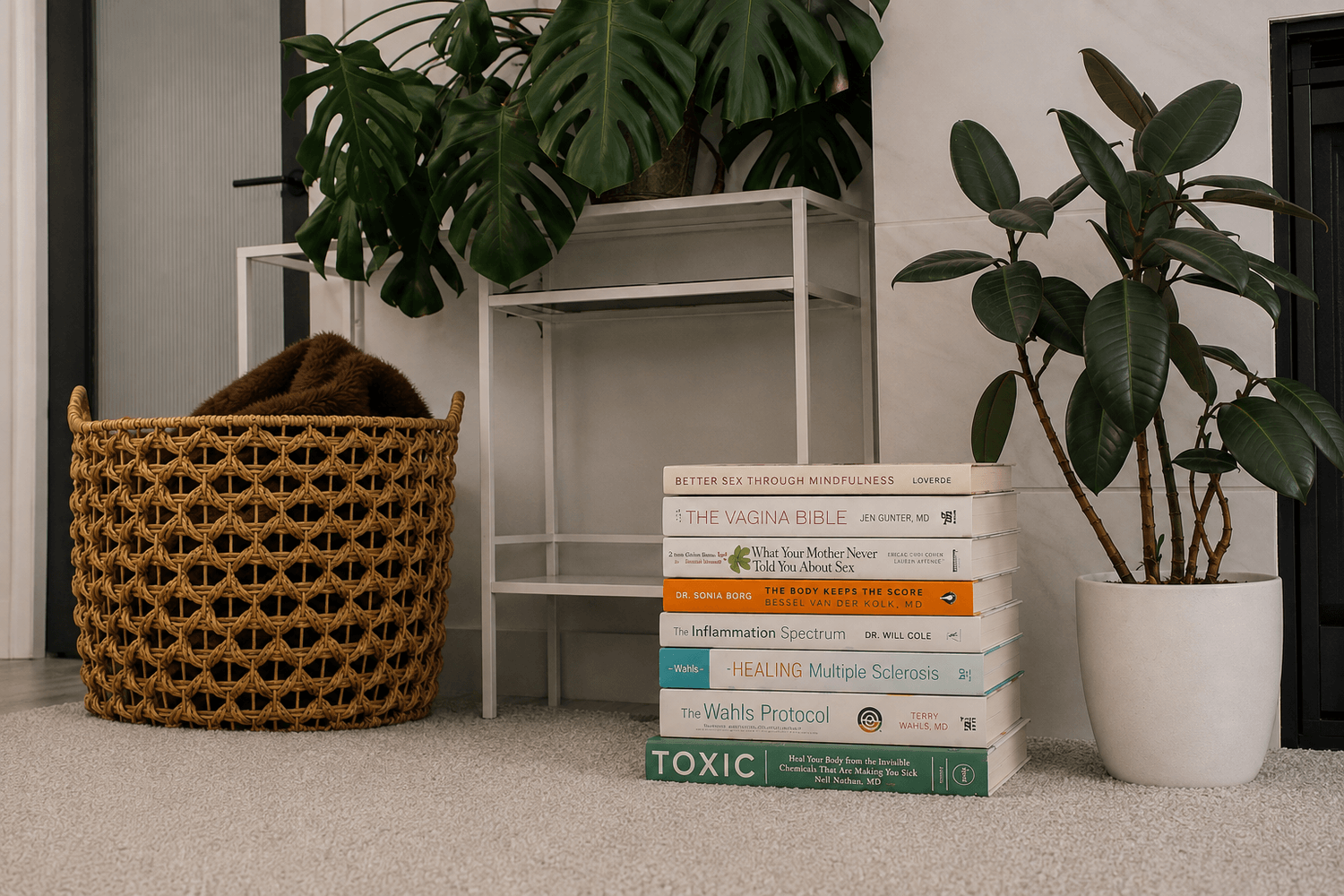
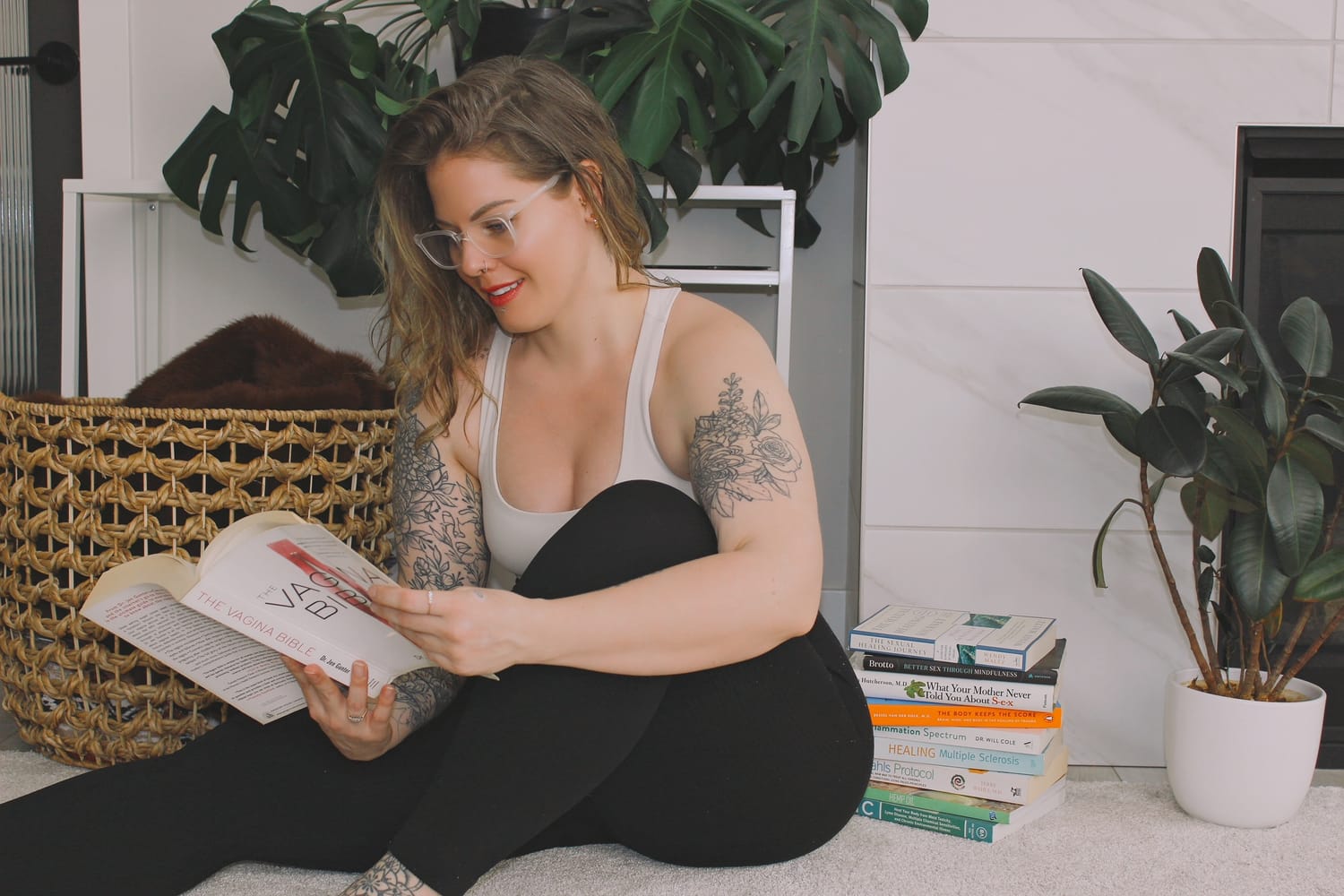
There is real research behind this. Dr Lori Brotto, a psychologist at the University of British Columbia, has spent years running trials on mindfulness-based approaches to women’s sexual difficulties, and her book Better Sex Through Mindfulness is where I would send you. It is written for women whose desire has gone quiet and who have been told it is in their heads, which is a different thing from being told it is not real.
The other thing that helped was widening the definition.
Intimacy is not only sex.
When the version you have isn't available, you have a real choice: you can wait, or you can start building something else. Touch that works. Closeness that does not hurt. Being close to somebody who knows what your body is doing and stays anyway.
And it is a practice. Some of it comes back. Some of it looks different from here on. Learning to accept the parts of yourself that are not what they used to be is one of the hardest pieces of living with a chronic illness, and I am not going to pretend otherwise.

You are not broken
That is the sentence I would want you to take out of this.
Your body changed. It is doing something difficult, and it is telling you in the only language it has: sensation, exhaustion, and things not working the way they used to.
That is not the same as being finished.
You are not disqualified from touch, from closeness, from being wanted, or from wanting. It might look different from what it looked like before. Different is not finished or disqualified.
And the fact that not one person in a white coat has ever asked you about this is not evidence that it does not matter. It shows they were uncomfortable.
You are not broken. Your body has changed,
and it is asking you to listen.
You do not have to work this out alone
This work matters to me. Sexual health was important to me long before I was diagnosed, and knowing how many women live with some form of sexual dysfunction, with or without an autoimmune condition, is part of why I trained in it. So if you have been carrying this quietly, start wherever feels manageable.
Come sit with us. The TRAC community is a place where you can say this out loud without it becoming a whole thing. The membership is free. → Join us
Or work with me one-on-one. This is what I am certified in. If you want to talk it through with somebody who will not flinch, we can do that. → Book a call
If the exhaustion underneath all of this is the part that landed, that is in What Your Body Has Been Carrying.
And if you need to raise this with a doctor who has never asked, start with What to Do When Your Doctor Doesn’t Take You Seriously.
You are allowed to want this part of your life back.
You are allowed to ask about it, out loud, to somebody whose job it is to answer.
And you are allowed to still be working it out. I am.
With you,
Jennifer
I’m a Certified Sexual Health Educator and Whole Health Consultant, not a physician. Everything here is my own experience and general education, and none of it is medical advice or a substitute for care from your own medical team. Please don’t start, stop, or change any treatment based on something you read on the internet, including mine.
SOURCES
MS Canada, "Mood Changes in MS"
https://mscanada.ca/mood-changes-in-ms
Healthline, "Multiple Sclerosis Mood Swings Explained"
https://www.healthline.com/health/multiple-sclerosis-mood-swings
MS Trust, "MS and your emotions" — on adjusting to diagnosis as a grieving process
https://mstrust.org.uk/information-support/wellbeing-ms/ms-and-your-emotions

HEY, I’M JENNIFER...
I'm a certified sexual health educator and whole health consultant, and I've spent fifteen years living what I now help other women navigate. I put Graves' disease into remission, recovered from Chronic Inflammatory Response Syndrome, and I manage MS and fibromyalgia through nutrition, nervous system regulation, and a deep commitment to understanding my own body.
I'm not on the other side of this. I'm still walking it.
I built TRAC Wellbeing to be the space I wish I'd had back then: warm, honest, informative, and genuinely understanding. If you're navigating chronic illness, hormonal health, or your intimate well-being, you're in the right place.
Let's Take Responsibility And Control of our health, together.


JOIN MY MAILING LIST

Taking responsibility and control of our health and well-being. Education is power. Prevention is protection.
NEWSLETTER
Notes from me on chronic illness, nutrition, nervous system support, and living well in a complicated body.
No spam, ever.
© 2025 TRAC Wellbeing — tracwellbeing.com — hello@tracwellbeing.com